Ductwork Services
Ductwork Repair & Installation in Brentwood, TN
The best HVAC equipment in the world can't overcome bad ducts. If some rooms never feel right or your bills keep climbing, the ductwork is the first place we look.
Duct inspection & testing · Sealing and replacement · Airflow verified room by room
 Brentwood’s Heating & Air Pros
Your Ducts Decide How Comfortable Each Room Feels
Direct answer: if you have hot and cold spots, weak airflow in distant rooms, or energy bills that don't match your equipment's efficiency, leaky or damaged ductwork is the most likely culprit. Ducts are the delivery system for every bit of heating and cooling you pay for, and in many Brentwood homes they're the weakest link. Call (615) 759-0451 and we'll inspect your ductwork and tell you plainly whether sealing, repair, or replacement makes sense.
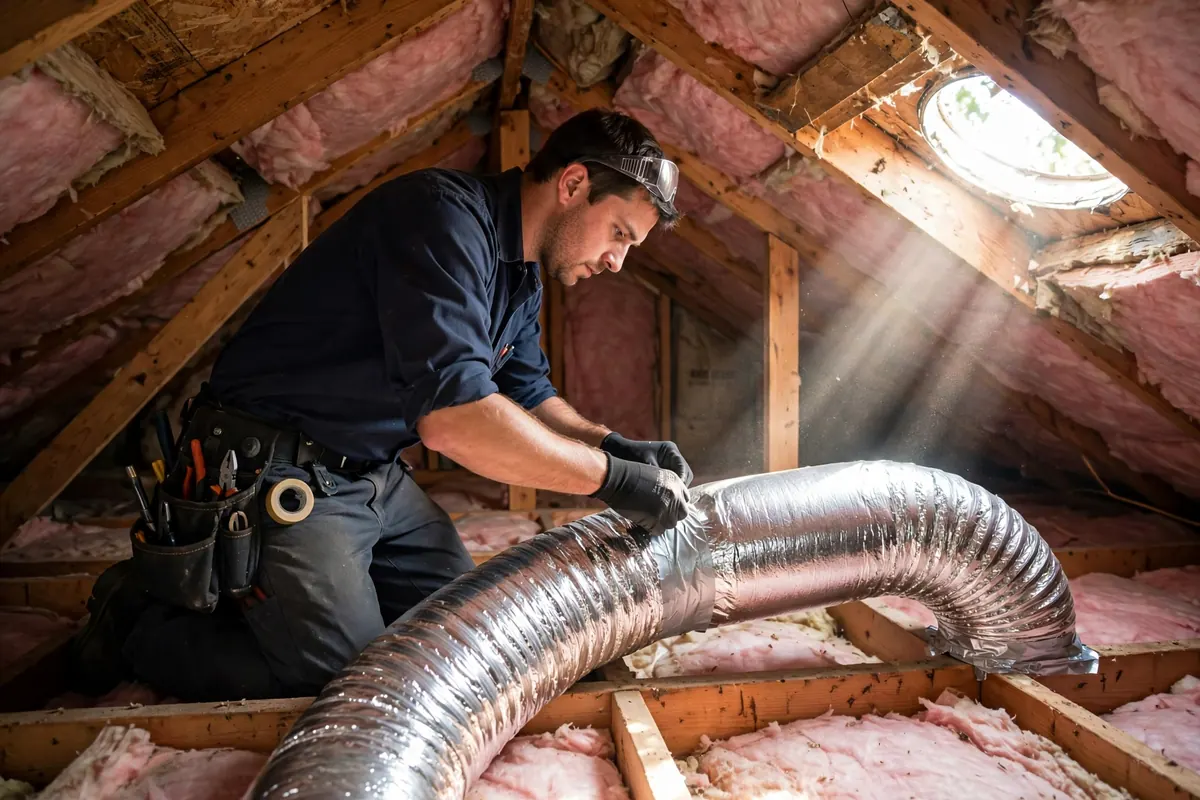
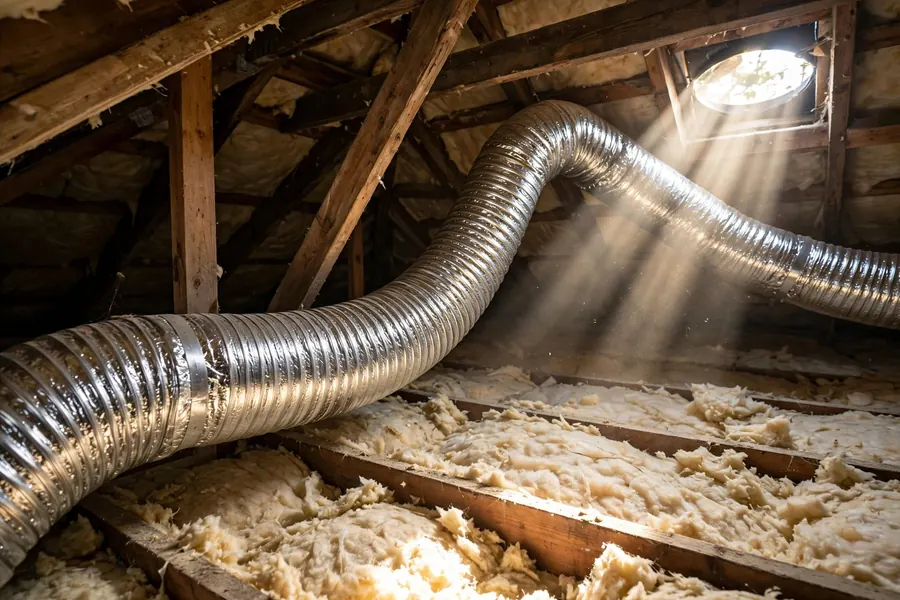
What we find in local attics tells the story. Across Williamson County, 1970s to 90s brick homes often have original flex duct that's sagged between supports, kinked at bends, or separated at connections after decades of attic heat. Every separation dumps conditioned air into the attic and pulls hot, dusty attic air into the return side. The system runs longer, rooms at the end of the run starve, and the equipment wears faster. It's the most common hidden efficiency loss we encounter, and most homeowners have no idea it's happening.
Larger Brentwood homes add complexity. Long duct runs to bonus rooms, finished basements, and additions lose pressure along the way, and multi-zone systems depend on dampers and duct sizing working together. When one zone can't keep up, the answer is rarely "bigger equipment." It's usually duct capacity, damper operation, or leakage, and we diagnose that before anyone talks about new equipment. New construction isn't immune either; we've seen brand-new homes with crushed flex runs and disconnected boots that never got a proper commissioning check.
Our process is straightforward: visual inspection of accessible ductwork, airflow measurements at the registers, and a check of the overall system static pressure. Then we recommend the right scope. Sometimes that's targeted sealing and reconnection. Sometimes a run needs full replacement. Sometimes the ducts are fine and the problem is equipment or controls. Either way, you get an honest assessment, and every duct job we do gets verified with airflow checks when we're done. For the full comfort picture, pair this with our indoor air quality work, since leaky ducts are also a top source of dust.
How We Fix Ductwork
Inspect and measure first
We visually inspect accessible ducts and measure airflow at registers plus system static pressure. No guessing about what's wrong.
Seal what can be sealed
Disconnected joints get properly reconnected and sealed, and accessible leaks are addressed with lasting materials, not tape that fails in a year.
Replace what's beyond saving
Crushed, kinked, or deteriorated runs get replaced with correctly sized duct, properly supported and insulated for attic conditions.
Verify room by room
After the work we recheck airflow at every register. You should feel the difference in the problem rooms, not just hear about it.
Ductwork Done the Right Way
Diagnosis before demolition
We prove the ducts are the problem with inspection and measurements before recommending any work.
Right-sized replacements
New duct runs are sized to the room's actual load and the system's capacity, not copied from the old undersized run.
Attic-tough installation
Proper supports, correct insulation levels, and sealed connections built to survive decades of Tennessee attic heat.
Signs Your Ducts Need Attention
If any of these sound familiar, your ductwork deserves a look.
| Sign | What it suggests | Likely fix |
|---|---|---|
| One room always hotter or colder | Undersized run, damper issue, or leakage on that branch | Targeted duct repair or resizing |
| Weak airflow from distant vents | Crushed flex, disconnections, or excessive run length | Replace or reroute the affected runs |
| Dust levels that never improve | Return-side leaks pulling in attic or crawlspace air | Seal return ducts; upgrade filtration |
| Bills climbing with no equipment change | Supply leaks dumping conditioned air into unconditioned space | Systematic sealing and reconnection |
Ductwork Across Brentwood
Governors Club
Gated estates with complex multi-zone duct systems. We trace comfort complaints through dampers, zone controls, and long duct runs to the real cause.
Witherspoon
Newer luxury homes where we verify builder-grade ductwork actually performs. Crushed runs and missed connections get found and fixed.
Your Questions, Answered
How do I know if my ducts are leaking?
The classic signs: rooms that never reach temperature, weak airflow at distant vents, dust that returns days after cleaning, and energy bills higher than your equipment's efficiency should produce. We confirm with inspection and airflow measurements.
Why is one room always hotter or colder?
Usually a duct issue on that branch: an undersized or crushed run, a damper that's closed or failed, or leakage starving the room. We trace that specific run and fix the cause rather than cranking the whole system harder.
Can you fix ducts in a tight attic or crawlspace?
In most cases, yes. We've worked in just about every attic configuration Williamson County offers. If access truly prevents a proper repair, we'll tell you that upfront along with the alternatives, rather than doing a half job.
Should I seal my ducts or replace them?
It depends on condition. Sound ducts with separated joints or accessible leaks are great candidates for sealing and reconnection. Crushed, kinked, deteriorated, or badly undersized runs should be replaced. We inspect first and recommend only what's needed.
Will new ducts make my system quieter?
Often, yes. Undersized ducts force high air velocity, which whistles and roars. Correctly sized ducts move the same air quietly. If noise is your complaint, duct sizing is one of the first things we check.
Do you test ducts before and after the work?
Yes. We measure airflow at the registers and check system static pressure before recommending work, then verify again when we're done. You get proof the fix worked, not just a promise.
ENERGY STAR's duct sealing guidance explains why leaky ducts are among the biggest energy wasters in American homes.