Heating Repair
Heating Repair in Brentwood, TN
A cold house in January gets your full attention fast. We repair furnaces, heat pumps, and air handlers across Brentwood, with honest diagnosis and heat restored as quickly as safety allows.
Furnaces, heat pumps & air handlers · Safety-checked repairs · 24/7 emergency line
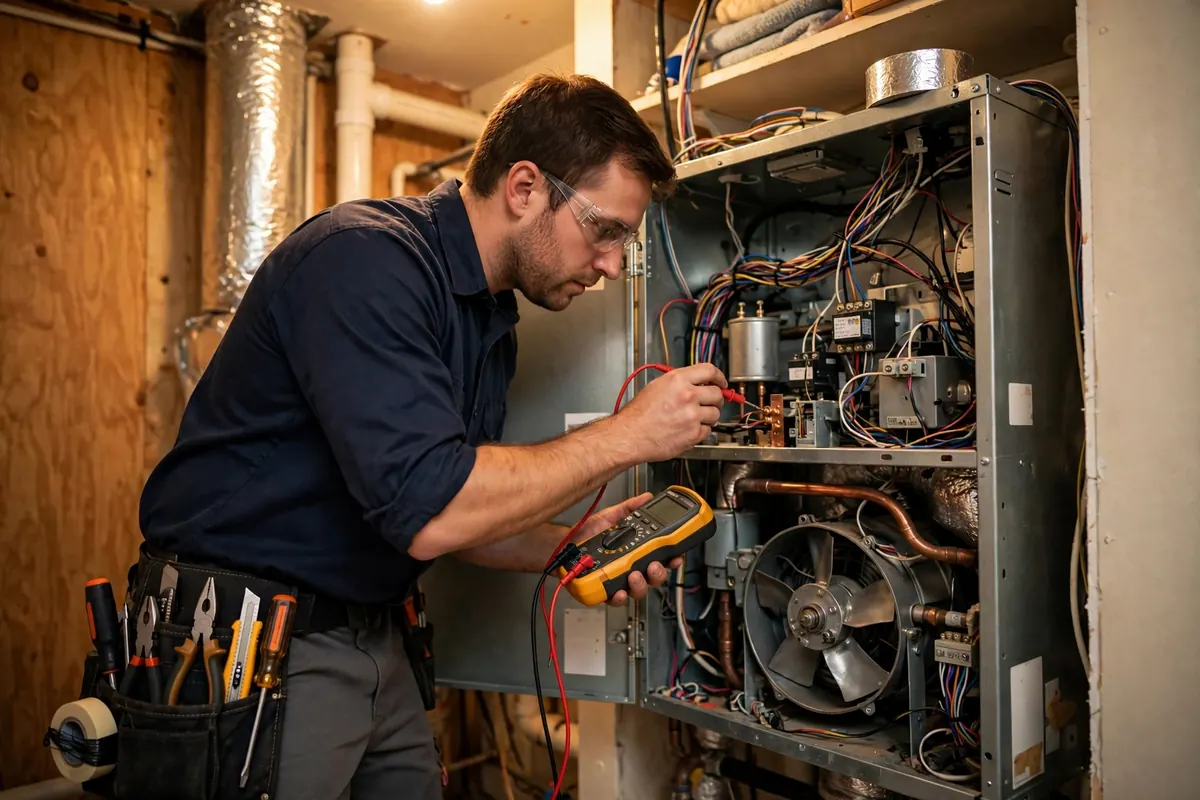 Brentwood’s Heating & Air Pros
No Heat? Start Here.
First, the direct answer: most no-heat calls are fixed the same day, and many turn out to be simpler than homeowners fear. A failed ignitor, a tripped rollout switch, a clogged filter choking airflow, or a thermostat that lost its settings. When you call (615) 759-0451, we triage over the phone, dispatch a technician, and diagnose on site before quoting anything. If it's a gas furnace issue, we treat combustion safety as step one, not an afterthought.
Before you call, run these safe checks. Confirm the thermostat is set to heat and the temperature is set above the room temperature. Look at the air filter; a completely clogged filter can trip safety limits and shut a furnace down. Check the breaker once. If you have a gas furnace, make sure the gas valve handle is parallel to the pipe, but if you smell gas at any point, stop, leave the house, and call from outside. Do not relight anything yourself and do not keep resetting tripped breakers or safety switches. Those devices tripped for a reason, and overriding them turns a repair into a hazard.
Brentwood's heating mix keeps us busy across system types. Older brick homes along Concord Rd and the Franklin Rd corridor often run gas furnaces paired with air conditioning, and those furnaces are now at the age where ignitors, flame sensors, and inducer motors wear out. Newer homes and all-electric setups lean on heat pumps, which have their own winter failure modes: defrost problems, reversing valve faults, and auxiliary heat running up the bill. We service the full range, including air handlers and dual-fuel setups, so one call covers whatever's in your utility room.
Large homes add a wrinkle: multi-zone systems can lose heat in one area while the rest of the house feels fine, which means problems hide until a cold snap exposes them. We check zone dampers, thermostat staging, and airflow room by room rather than assuming the equipment is the whole story. And because heating breakdowns cluster on the coldest nights, the same preventive maintenance logic from summer applies in fall: a preseason check finds weak ignitors and tired motors before January does.
How We Bring the Heat Back
Safety first, always
On gas equipment we check for gas leaks, verify proper venting, and inspect the heat exchanger before anything else. Combustion safety is never negotiable.
Diagnose the real cause
We test ignition, flame sensing, airflow, and controls rather than swapping the most common part and hoping. You get the actual failure identified.
Repair with the right parts
Ignitors, flame sensors, inducer motors, control boards, sequencers: we stock the components behind most no-heat calls for same-day fixes.
Verify full operation
After the repair we run complete heating cycles, check temperature rise across the furnace or heat pump, and confirm every zone calls and satisfies properly.
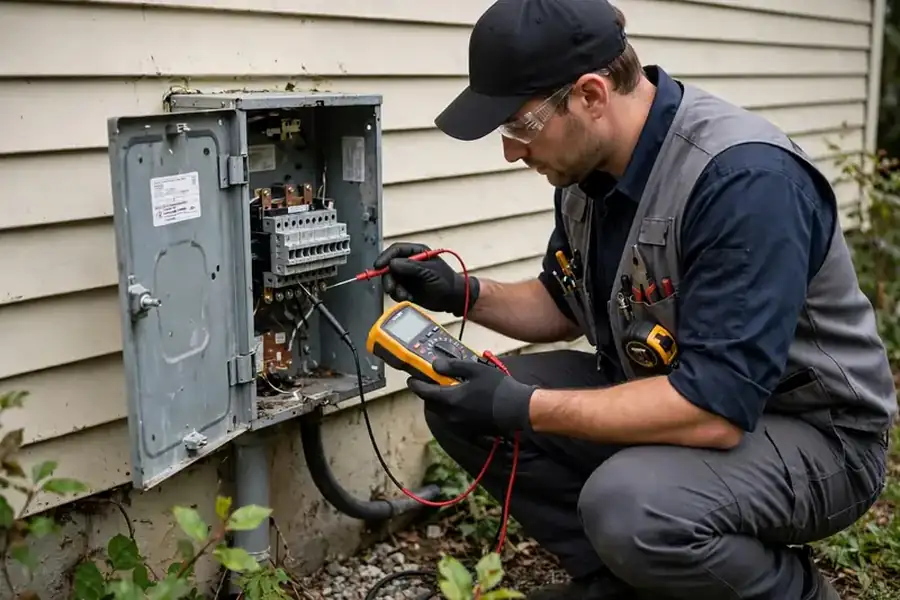
Why Call Us When the Heat's Out
All heating types, one call
Gas furnaces, heat pumps, air handlers, dual-fuel: we diagnose and repair the whole mix found in Williamson County homes.
No scare tactics
A failed ignitor is a failed ignitor, not an excuse to sell you a furnace. We fix what's fixable and prove it with testing.
Cold-night response
Heating failures get priority dispatch in winter, with 24/7 emergency coverage when temperatures drop.
No-Heat Triage: What to Check Safely
Work through this list in order. Stop and call us the moment something looks or smells wrong.
| Symptom | Safe first check | Call us when |
|---|---|---|
| Thermostat screen blank | Replace batteries; check the breaker once | Still blank after fresh batteries |
| System runs but blows cool air | Check the filter; confirm heat mode and setpoint | Filter is clean and it's still cool |
| Furnace tries to start then stops | Don't keep resetting it; note any blinking error code | It locks out or repeats the cycle |
| Smell gas near the equipment | Leave the house immediately; call from outside | Always: this is non-negotiable |
Heating Repair Across Brentwood
Raintree Forest
Wooded lots where all-electric heat pumps are common. We keep defrost controls and auxiliary heat staging dialed in for cold snaps.
Concord Road
East Brentwood's mix of 90s builds and newer homes runs the full range from gas furnaces to heat pumps. One call covers all of it.
Your Questions, Answered
My heat stopped working. What should I check first?
Thermostat settings and batteries, the air filter, and the breaker, each checked once. If you have a gas furnace, you can glance at the gas valve position. If you smell gas, skip all of this, leave the house, and call from outside.
Why does my heater keep short cycling?
Short cycling usually means a safety limit is tripping: restricted airflow from a clogged filter, an overheating furnace, or a flame sensor cutting out. It can also be a thermostat or sizing issue. Either way, it's the system protecting itself, and it needs diagnosis rather than repeated resets.
Is a burning smell when the heat kicks on normal?
A brief dusty smell on the first heating cycle of fall is normal: dust burning off the heat exchanger. It should fade within an hour or two. A persistent burning smell, or any smell of gas or melting plastic, is not normal. Turn the system off and call us.
My heat pump runs but the house stays cold. What gives?
It may be stuck in defrost, low on refrigerant, or running on auxiliary heat because the main cycle isn't keeping up. Check that the outdoor unit isn't iced over solid, then call. Running a struggling heat pump for weeks usually just runs up the electric bill.
Do you repair both furnaces and heat pumps?
Yes. Gas furnaces, heat pumps, air handlers, and dual-fuel combinations are all in our daily work across Brentwood and Williamson County. You don't need to know which type you have before calling; we'll identify it on site.
How quickly can you get heat back on?
Most no-heat calls are resolved the same day, since the common failures are parts we stock. Heating failures get priority dispatch in cold weather, and our 24/7 line covers nights and weekends when temperatures drop.
Heating equipment performance is certified nationally. AHRI maintains the certification programs behind the efficiency ratings on furnaces and heat pumps.