Furnace Repair
Furnace Repair in Brentwood, TN
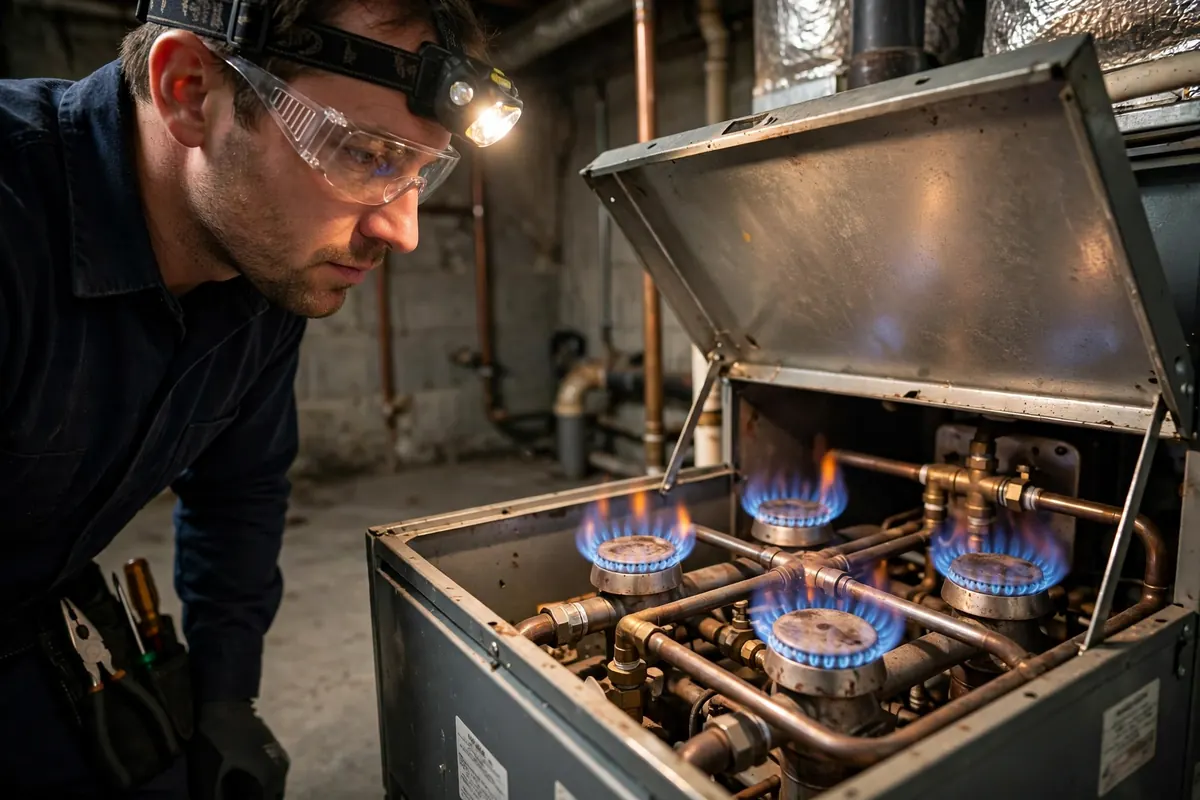
Your gas furnace is a controlled fire in a metal box, and it deserves a technician who treats it that way. We diagnose furnace problems thoroughly, fix them safely, and never cut corners on combustion.
Combustion safety checked every visit · Same-day repairs · 24/7 winter emergency line
 Brentwood’s Heating & Air Pros
Gas Furnace Problems, Fixed Safely
The direct answer: most gas furnace failures are straightforward repairs, a worn ignitor, a dirty flame sensor, a tired inducer motor, a failed control board, and a good technician resolves them in one visit. What makes furnace work different from other heating repairs is the combustion side: gas, flame, venting, and carbon monoxide. We check all of it on every call, because a furnace that heats but doesn't vent properly isn't fixed. Call (615) 759-0451 any time your furnace acts up.
The failures we see most in Brentwood's gas furnaces follow the equipment's age. Hot-surface ignitors are wear items; when they crack, the furnace tries to light, fails, and locks out. Flame sensors get coated and stop proving flame, which shuts the gas valve within seconds as designed. That's the system protecting you, not a defect. Inducer motors and blower motors wear with hours, and control boards fail with age and power surges. We test each component rather than guessing, and we show you what failed.
Then there's the heat exchanger, the part that matters most for safety. It separates combustion gases from the air your family breathes. A cracked heat exchanger can let carbon monoxide into the supply air, which is why we inspect it on every furnace visit and why we will red-tag a furnace with a confirmed crack. No repair, no negotiation, no "let's just watch it." If that ever happens in your home, we'll explain exactly what we found and lay out your options clearly.
Know the gas protocol cold: if you smell gas, don't light anything, don't flip switches, don't hunt for the source. Leave the house and call from outside. For everything less urgent, the usual safe checks apply: thermostat settings, filter condition, breaker checked once. Many 1970s to 90s brick homes around the Franklin Rd and Concord Rd corridors run original-era furnaces that are now in the repair-or-replace window, and we'll give you that math straight. If your whole heating setup is due for rethinking, or the ducts are part of the comfort problem, we'll say so.
How We Repair Furnaces
Combustion safety first
Gas leak check, venting inspection, and heat exchanger examination happen before any other diagnosis. If it's not safe, nothing else matters.
Component-level diagnosis
Ignitor resistance, flame sensor microamps, inducer and blower amperage, pressure switch operation: we measure, not guess.
Quality replacement parts
We install the correct ignitor, sensor, or motor for your specific furnace model, not a universal part that's close enough.
Full-cycle verification
After repair we run complete heating cycles, check temperature rise against the rating plate, and confirm safe, steady operation.
Our Furnace Repair Standards
We will red-tag an unsafe furnace
A cracked heat exchanger or dangerous venting gets shut down on the spot. Your family's safety outranks every other consideration.
No part-swapping roulette
Every failed component is tested and confirmed before replacement. You pay for the fix, not our guesses.
Straight talk on old equipment
When a furnace is past sensible repair, we show you the numbers and options without pressure or manufactured urgency.
Furnace Sounds and Smells, Translated
Your furnace communicates. Here's what it's usually saying.
| Sound or smell | Possible cause | What to do |
|---|---|---|
| Clicking but no ignition | Cracked ignitor or ignition control failure | Call; the furnace will lock out |
| Booming at startup | Delayed ignition from dirty burners | Call soon; this stresses the heat exchanger |
| Rattling or vibrating | Loose panels, worn blower, or cracked heat exchanger | Call; don't ignore new rattles |
| Rotten-egg smell | Natural gas leak | Leave immediately and call from outside |
Furnace Repair Across Brentwood
Witherspoon
Newer homes with high-efficiency condensing furnaces. We service the condensate drainage and venting these units need, not just the burners.
Concord Road
East Brentwood homes with 90s-era furnaces entering the heavy-repair years. Honest repair-or-replace guidance is what these systems need most.
Your Questions, Answered
What are the signs my gas furnace needs repair?
No heat or weak heat, the furnace starting then stopping, new rattling or booming sounds, the blower running constantly, or a yellow or flickering burner flame instead of steady blue. Any of these deserves a technician's look.
Is it safe to run my furnace if I smell gas?
No. Leave the house immediately without flipping switches or lighting anything, and call from outside. A gas smell is never a wait-and-see situation. Once the area is declared safe, we can inspect the furnace itself.
Why won't my furnace ignite?
Most often a cracked hot-surface ignitor or a flame sensor that can't prove flame. It can also be a failed inducer motor, a blocked vent, or a control board issue. We test the ignition sequence step by step to find the exact failure.
What is a cracked heat exchanger, and why does it matter?
The heat exchanger keeps combustion gases separate from your home's air. A crack can let carbon monoxide into the supply air, which is dangerous. We inspect it on every visit, and a confirmed crack means the furnace gets shut down until it's addressed.
My furnace is 18 years old. Repair or replace?
At that age, it depends on the repair cost and the furnace's overall condition, especially the heat exchanger. A minor repair on a sound furnace can still make sense. A major repair usually doesn't. We'll inspect thoroughly and give you both numbers.
Do you service the furnace and the AC coil together?
Yes. The indoor coil sits with the furnace, and we check both as a system: airflow, drainage, refrigerant-side components, and controls. Heating and cooling share the air handler, so servicing them together makes sense.
Furnace efficiency and safety standards come from national programs. AHRI certifies heating equipment performance so ratings mean the same thing across brands.