Indoor Air Quality
How Tennessee Humidity Turns Your AC Into a Mold Risk
Your air conditioner is the single best mold fighter in your house, because it dehumidifies as it cools. But when Middle Tennessee humidity overwhelms the system, the AC itself can become part of the problem. Here is how that happens and how to prevent it.
By Brentwood HVAC Repair Pro · Published · Brentwood, TN
Same-day appointments · 24/7 emergency help in Brentwood, TN
 Brentwood’s Heating & Air Pros
The direct answer: your AC fights mold by pulling moisture out of the air every time it cools. Mold takes hold when the system cannot keep indoor humidity in the 40 to 50 percent range. The usual culprits are an oversized unit that short-cycles and shuts off before it dehumidifies, a clogged condensate drain leaving standing water in the pan, leaky return ducts sucking humid attic air into the system, or the fan set to ON instead of AUTO, which re-evaporates water right off the coil. In Middle Tennessee, where summer air can feel like a wet blanket, any one of these turns your cooling system from mold prevention into a mold habitat.
Why Middle Tennessee Is Hard on AC Systems
A cooling system in dry country mostly battles heat. Here it battles heat and water at the same time. A typical Brentwood home's AC can wring several gallons of water out of the air on a humid July day, and all of it has to go somewhere: down the condensate drain. When that drain clogs with algae and sludge, water backs up into the pan and the float switch kills the system. Worse, a pan that overflows slowly instead of tripping the switch leaves standing water in a dark, warm attic. We have pulled drain pans that looked like small ponds. Mold does not need an invitation beyond that.
The Attic Air Handler Problem
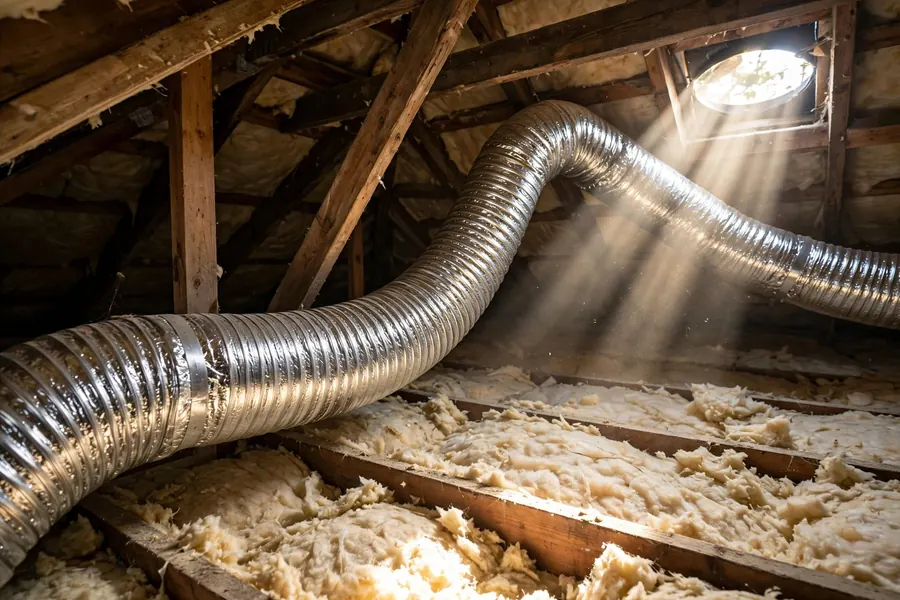
Most Brentwood homes, from 1980s two-stories near Brenthaven to new construction in Witherspoon, put the indoor air handler in the attic. That is normal, but it puts cold equipment in the most humid part of the house. When humid attic air meets a cold air-handler cabinet or poorly insulated ductwork, condensation forms on the outside of the equipment. Add a clogged drain and you get pooled water around the unit, soaked insulation, and microbial growth on surfaces you never look at. Homes on wooded lots, like many in Raintree Forest, run even more humid because of the shade and vegetation around the house. The prevention is unglamorous but effective: keep the drain clear, keep the cabinet and ducts insulated and sealed, and have the system checked before cooling season so small problems do not spend four months growing in the dark.
Signs Mold Is Growing in Your System
- A musty smell when the system starts. The classic sign. If the first blast of air each cycle smells like a damp basement, something is growing on the coil, in the pan, or in the ducts.
- Visible growth on registers or the air handler. Dark spots around supply registers or on the equipment itself deserve a professional look.
- Humidity that never drops. Buy a ten-dollar hygrometer. If indoor readings sit above 55 to 60 percent for days while the AC runs, the system is not dehumidifying properly.
- Water where it should not be. Stains under the air handler, a constantly wet drain pan, or water spots on the ceiling below an attic unit.
- Allergy symptoms that track with the AC. If sneezing and congestion arrive with each cooling cycle and ease when the system is off, the air distribution system is a suspect.
A note on honesty: not every musty smell is mold, and not every dark spot is dangerous. We inspect first, identify what is actually growing and why, and fix the moisture problem that feeds it. Cleaning without fixing the moisture is a rental, not a repair.
How to Keep Humidity Under Control
| Step | What it does | Effort |
|---|---|---|
| Set the fan to AUTO, not ON | Stops re-evaporating water off the coil between cycles | Free, one thermostat tap |
| Pour vinegar down the drain line monthly | Keeps algae and sludge from clogging the condensate line | Five minutes |
| Change the filter on schedule | Keeps airflow up so the coil dehumidifies properly | Five minutes |
| Seal accessible duct connections | Stops humid attic air from entering the system | Weekend project |
| Annual professional tune-up | Verifies charge, airflow, drainage, and coil condition | One service visit |
| Whole-home dehumidifier | Takes the moisture load off the AC, especially in shaded or basement homes | Professional install |
| Duct inspection and sealing | Fixes the hidden humidity highway in the attic | Professional service |
Your Questions, Answered
Can my AC cause mold in my house?
The AC itself is your main defense against mold, because it dehumidifies as it cools. Mold problems start when the system cannot keep up: an oversized unit that short-cycles, a clogged drain pan, leaky ducts pulling in humid attic air, or a system that runs the fan constantly without dehumidifying.
Why is my attic air handler sweating or leaking water?
An air handler sweats when cold equipment meets very humid attic air, often because of poor insulation on the cabinet or ductwork, or a clogged condensate drain backing water into the pan. Standing water in a drain pan in a dark attic is an ideal mold habitat, so this deserves attention quickly.
What indoor humidity level should I aim for in Tennessee?
Between 40 and 50 percent relative humidity in summer. Above 55 to 60 percent for extended periods, mold growth becomes much more likely on cool surfaces like ductwork and supply registers. A ten-dollar hygrometer tells you where you stand.
Will a whole-home dehumidifier help my AC?
Often, yes. A dehumidifier takes the moisture load off the AC, which lets you set the thermostat a degree or two higher and still feel comfortable. It is especially helpful in homes with oversized systems, finished basements, or shaded lots where humidity runs high even when cooling needs are moderate.
My AC runs but the house still feels clammy. Why?
The most common cause is an oversized system that cools the air quickly and shuts off before it has run long enough to wring out the moisture. Other causes include the fan set to ON instead of AUTO, which re-evaporates water off the coil, and leaky return ducts pulling humid attic air into the system.