Before you call, or while you wait
Emergency AC Checklist: What to Do Before Your Technician Arrives
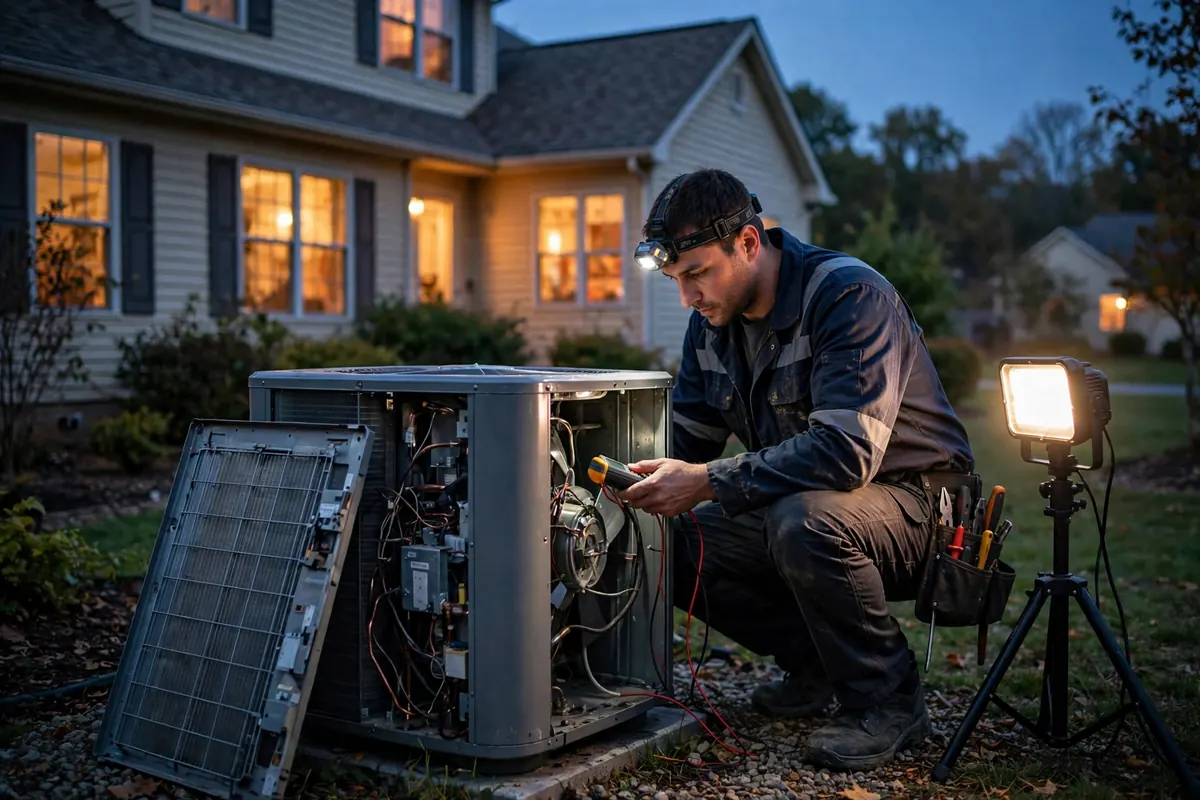
Your AC quit at the worst possible time. Take a breath: a handful of safe, simple checks resolve many no-cooling calls, and the rest tell us exactly what to bring. Run through this list, note what you find, and call us 24/7: day, night, weekends, holidays.
Real technicians, real trucks, anywhere in Brentwood, 37027, day or night.
 Brentwood’s Heating & Air Pros
Safe Checks to Try Right Now
Everything here is safe for a homeowner. Work through the list in order. Each step eliminates one common cause.
- Check the thermostat. Set to COOL, temperature a few degrees below the room temp, fan on AUTO. If it has batteries, swap in fresh ones. A surprising number of "dead AC" calls end here.
- Check the breaker. Find the HVAC breaker in your panel. If it's tripped, flip it fully OFF, then back ON, once. If it trips again, leave it off and call us: that's the breaker doing its job.
- Look at the air filter. A filter clogged solid can freeze the coil or shut the system down on a safety limit. If it's gray and matted, replace it and give the system time to recover.
- Check the outdoor disconnect. There's a shutoff box near your outdoor unit. Make sure nobody bumped it to OFF during yard work or a storm.
- Look for water at the indoor unit. A full condensate pan trips the overflow switch and kills the system. If you see standing water, turn the system off. That switch just saved your ceiling.
- Check for ice. Frost or ice on the refrigerant lines or the indoor coil means something is restricting airflow or refrigerant. Turn cooling OFF, set the fan to ON to help it thaw, and don't keep running it frozen.
What NOT to Do
The wrong move can turn a simple repair into a dangerous one. These are technician jobs, full stop.
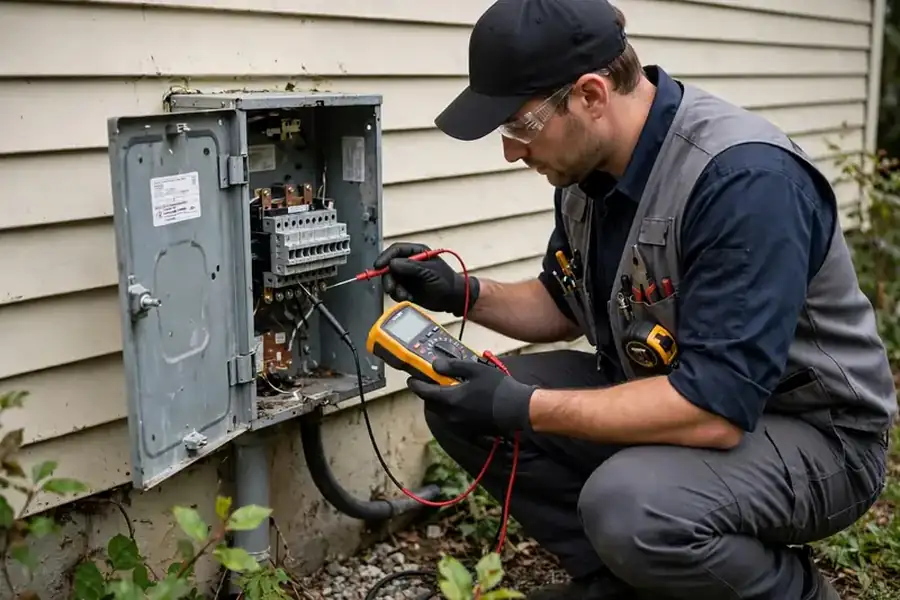
- Don't open electrical panels on the equipment. Capacitors hold a charge even with the power off. Leave every wire, contactor, and capacitor to us.
- Don't keep resetting a tripping breaker. One reset is fine. Repeated resets feed an electrical fault and risk real damage. Call instead.
- Don't run a frozen system. Ice on the lines means the compressor is working against a blockage. Running it can kill the most expensive part in the system.
- Don't add refrigerant yourself. Refrigerant handling requires certification, the right charge matters to the ounce, and low refrigerant always means there's a leak to find. This one is legally and practically a pro job.
- Don't ignore burning smells. A brief dusty smell at first fall startup is normal. A sharp electrical or burning smell any other time means: turn the system off at the thermostat and the breaker, then call us immediately.
When to Call 24/7 Right Away
Not every AC problem is an emergency. These are.
- No cooling during extreme heat. Tennessee summers are no joke, especially for kids, older family members, and pets. Don't wait it out.
- Burning smells, sparking, or arcing sounds. Shut the system down at the thermostat and breaker, then call. Electrical faults don't get better on their own.
- Water coming through a ceiling. Attic air handlers, common in Brentwood's two-story homes, can overflow a clogged drain fast. Turn the system off and call.
- A breaker that keeps tripping. That's a fault somewhere in the circuit or the equipment. It needs a technician, not another reset.
- Total system silence in a heat wave. If the indoor and outdoor units are both dead and your checks didn't revive them, that's what the emergency line is for.
Anything milder: lukewarm air on a pleasant evening, a new rattle that just started can usually wait for a morning appointment. When in doubt, call and describe it. We'll tell you honestly whether it can wait.
Have This Ready When We Arrive
Two minutes of prep makes the visit faster.
- Your symptoms, in order. What happened first, and when. "It started blowing warm air around 3 PM, then the breaker tripped" is gold for a technician.
- What you already checked. Tell us which steps from this list you tried and what you found. We won't make you repeat them.
- System basics, if you know them. Brand, rough age, and where the indoor and outdoor units are. Don't worry if you don't know. We'll figure it out.
- A clear path. Move anything blocking the indoor unit, the thermostat, and the breaker panel. Attic access too, if your air handler is up there.
Your Questions, Answered
My AC just stopped. What's the first thing I should check?
Start with the thermostat: make sure it's set to cool and a few degrees below room temperature, with fresh batteries if it uses them. Then check the breaker panel for a tripped HVAC breaker. Those two steps resolve a surprising number of no-cooling calls.
Is it safe to reset my AC breaker?
Resetting it once is safe. Flip it fully off, then back on. But if it trips again, stop: a breaker that trips repeatedly is protecting you from an electrical fault, and that's a job for a technician. Never tape or hold a breaker in the on position.
There's ice on my AC lines. Should I keep running it?
Turn the cooling off and let the ice thaw completely, which can take several hours. Running a frozen system doesn't cool your home and can damage the compressor. A dirty filter or low airflow is often the cause, so check the filter while you wait.
When does an AC problem count as an emergency worth a 24/7 call?
Call right away if there's no cooling during extreme heat, any burning smell, sparking or arcing sounds, water leaking through ceilings, or a repeatedly tripping breaker. Those are safety or property-damage situations. Lukewarm air on a mild evening can usually wait until morning.
What should I have ready when the technician arrives?
Know the symptoms and when they started, what you've already checked, and the age and brand of the system if you know them. Clear a path to the indoor unit, the thermostat, and the breaker panel. That's it: we'll take it from there.